
Is Breakthrough Advertising Really Worth $300–$500? The 3 Principles That Changed How We Build Video Ads
Is Breakthrough Advertising worth $300–$500? We break down the 3 direct response principles from Eugene Schwartz that transformed our UGC vi
There's one book that sits on the desk of almost every serious direct response marketer. It costs anywhere from $300 to $500 on the secondhand market. And after two full years of being deep in UGC video ads, performance marketing, and creative strategy—this is the one book that made everything click.
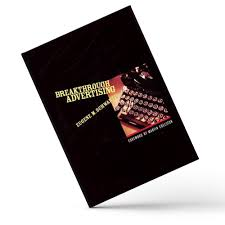
It's called Breakthrough Advertising by Eugene Schwartz.
But is it actually worth that price tag? And more importantly—can you use what's inside to make your video ads perform better starting today?
The short answer: yes. And in this post, we're breaking down the three most powerful principles from the book that directly impact how we create high-performing UGC ads for ecommerce brands. These aren't abstract marketing theories. These are frameworks we apply to every single ad we produce—and they're a big reason our creative testing hit rate sits between 30–50% while the industry average hovers around 8–12%.
Let's get into it.
What Is Breakthrough Advertising?
Breakthrough Advertising was written by Eugene Schwartz in 1966. Schwartz was one of the greatest direct response copywriters in history—responsible for some of the highest-grossing ads and sales letters ever created.
The book covers the psychology behind why people buy, how to write copy that moves them to action, and how to structure ads based on where your market actually is in terms of awareness and sophistication.
It's not a "tips and tricks" book. It's a deep dive into human desire, market dynamics, and the mechanics of persuasion. And while it was written long before TikTok, Instagram, or Facebook Ads existed, the principles inside are arguably more relevant now than when they were first published.
That's because the platforms have changed, but human psychology hasn't.
If you're building a creative testing strategy, running ecommerce video marketing campaigns, or scaling a performance creative agency, understanding Schwartz's work gives you an unfair advantage. It's the foundation that separates strategic ad creation from guesswork.
For more on Schwartz's influence on modern advertising, check out CopyBlogger's breakdown of his legacy.
Principle 1: Market Sophistication
Market Sophistication is the concept Schwartz uses to describe the level of awareness in your marketplace—and how much experience your prospects have had with products or services like yours.
This one idea will fundamentally change how you write copy for your ads.
There are five levels of market sophistication, and each one requires a completely different advertising approach:
- Level 1 – Be First: You're introducing a new product or solution into the market. Your prospect has never seen anything like this before. Simple, direct claims work because nobody else is making them yet. Think of the first brand to say "lose 10 pounds in 30 days."
- Level 2 – Enlarge the Claim: Competitors have entered the market. Now you need to make bigger, bolder claims to stand out. "Lose 10 pounds in 30 days" becomes "Lose 20 pounds in 14 days—guaranteed."
- Level 3 – Introduce a Mechanism: Your audience has heard every claim before. They're skeptical. Now you need to explain how your product works. The mechanism becomes the star. "Our patented collagen peptide technology targets stubborn fat at the cellular level."
- Level 4 – Enlarge the Mechanism: Even mechanisms get copied. Now you need a bigger, better, more unique mechanism. Layer specificity, science, and proof onto your mechanism to regain attention.
- Level 5 – Connect with Identity: The market is saturated. Claims and mechanisms don't cut it anymore. Now you need to connect with the prospect's identity—who they want to become. This is where lifestyle-driven UGC marketing content shines.
Why this matters for your video ads:
Most brands creating beauty UGC video ads, fashion UGC campaigns, or wellness UGC content are operating in Level 4 or Level 5 markets. If you're still running Level 1 or Level 2 style ads—making big, direct claims without mechanisms or identity connection—your ads will fall flat.
Understanding where your market sits on this scale tells you exactly what type of hook, what kind of story, and what style of creative you need to produce. It's the difference between a $2 CPM and a $15 CPM.
When we build ads at VisCap, market sophistication analysis is the first step in our creative strategy process. Before we write a single script, before we cast a single actor, we identify which level the market is at—and we build the entire ad around that insight.
Principle 2: Intensification
Intensification is the process of crystallizing your prospect's desires by making them visualize the wonderful new world so strongly that when you offer the opportunity to buy, they can't resist.
This is the second most powerful direct response principle linked to ad success. And there are 13 techniques Schwartz outlines for doing it.
Here's what intensification looks like in practice for video ad production:
- Sensory language: Don't just say the product works. Make the viewer feel what it's like to use it. "Imagine waking up, looking in the mirror, and seeing skin so smooth you actually do a double-take."
- Future pacing: Transport the prospect into their ideal future. Show them living the life they want—with your product as the bridge. This is especially powerful in skincare UGC content and fitness brand video marketing.
- Specificity stacking: Vague claims feel like marketing. Specific details feel like truth. Instead of "thousands of happy customers," say "14,847 five-star reviews from women over 35."
- Contrast framing: Show the pain of the current reality right next to the pleasure of the desired outcome. The bigger the contrast, the stronger the desire.
- Social validation: Layer in proof that other people—ideally people like your prospect—are already living in that "new world." Testimonials, review screenshots, and UGC-style reactions all serve this function.
The key insight here is that intensification isn't about lying or making false promises. It's about taking the real benefits of your product and presenting them in a way that makes your prospect viscerally feel the transformation.
In UGC video ads, intensification shows up in the B-roll, the voiceover tone, the music choices, and the pacing of the edit. It's the difference between an ad that informs and an ad that compels.
When our team creates ads using our VisCap AI video builder, intensification techniques are baked into every framework and script template. Each element of the ad—from the hook to the CTA—is designed to progressively build desire.
For a deeper look at desire-driven copywriting, explore The Gary Halbert Letter archives.
Principle 3: Camouflaging (The Secret to UGC That Converts)
Here's where it all comes together—especially if you're creating content for platforms like TikTok, Instagram Reels, or Facebook.
Camouflaging is the process of making your ads blend in so that when your prospect views them, their guard doesn't go up. They don't even realize they're consuming an ad until they've already been convinced.
This is essential in today's media environment.
Think about your own behavior on social media. The second you recognize something as an ad, what do you do? You scroll past it. Your brain has been trained to filter out anything that looks, sounds, or feels like advertising.
Schwartz recognized this pattern decades ago—and his solution was to make the ad look like everything except an ad.
How camouflaging works in modern UGC:
- Native format: Your ad should look like it belongs in the feed. If you're running on TikTok, it should look like a TikTok. If you're on Instagram, it should feel like an organic post. This is the entire foundation of effective social media video production.
- Authentic voices: This is why UGC-style content outperforms polished brand content. Real people talking to camera in natural settings triggers trust, not skepticism.
- Editorial hooks: The best-performing hooks don't scream "BUY NOW." They open with curiosity, controversy, or storytelling. "I was today years old when I found out..." or "POV: You finally found the one product that actually works."
- Platform-native editing: Quick cuts, captions, trending sounds, reaction-style formats. The editing style should match what's already performing organically on the platform. This is a core part of our video ad optimization approach.
- Content-first framing: Lead with value, entertainment, or education. The product comes second. The viewer should get something from the ad even if they don't buy.
This is exactly why we use actors instead of creators in most of our productions. Creators bring their own style and vision—which is great for organic content—but it makes it harder to control the camouflaging elements. With actors, we direct every aspect of the performance to match the exact platform and audience we're targeting.
Camouflaging is also why ad composition matters so much. Our data shows that the ideal ratio is roughly 70% B-roll to 30% face-to-camera for most verticals. Too much face-to-camera feels like a pitch. Too much B-roll loses the personal connection. The blend is what makes it feel authentic.
Learn more about platform-native content creation from Meta's Creative Best Practices guide.
How These Principles Apply to UGC Video Ads
When you stack all three principles together—Market Sophistication, Intensification, and Camouflaging—you get a framework for creating direct response video ads that actually convert.
Here's how we integrate them into our process:
Step 1: Identify the sophistication level. We research the market, analyze competitors' ads, and determine where the prospect sits on Schwartz's awareness and sophistication scale. This tells us what type of hook, mechanism, and proof we need.
Step 2: Build intensification into the script. Every ad we produce targets 6–8 psychological triggers, pulling from Schwartz's 13 intensification techniques and the Life Force 8 desires framework. This ensures the copy doesn't just inform—it compels action.
Step 3: Camouflage the ad. We match the format, pacing, visual style, and voice to whatever platform we're targeting. The final product should feel like native content, not a commercial.
This system is why our creative testing strategy consistently delivers hit rates of 30–50%. It's not magic. It's methodology.
And it all traces back to principles Eugene Schwartz documented over 50 years ago.
Why Most Advertisers Get This Wrong
The biggest mistake we see brands make is treating their UGC ads like traditional advertisements. They lead with the brand, open with a logo, use polished studio footage, and make generic claims about their product.
That approach fails for three reasons:
- They ignore sophistication levels. They run Level 1 ads in a Level 5 market and wonder why nobody cares.
- They skip intensification. The ad communicates features and benefits but never creates visceral desire. The viewer understands the product but doesn't want it badly enough to click.
- They don't camouflage. The ad screams "sponsored content" from the first frame. The prospect's mental filter activates immediately, and no amount of clever copy can overcome that initial resistance.
If you're spending money on ecommerce video marketing and not seeing results, chances are you're making at least one of these mistakes. The fix isn't to make more ads—it's to make better ads using proven frameworks.
For data on UGC performance vs. traditional ads, see Nielsen's research on consumer trust in advertising.
How We Use These Principles at VisCap Media
At VisCap, we've analyzed over $100 million in ad spend data across accounts spending $500K–$10M monthly. Every framework, every script template, and every creative brief we produce is built on top of Schwartz's principles.
Our approach includes:
- 8 critical variables tested in every ad (direct response principles, editing effects, video length, number of actors, ad composition, visual hooks, sales sequence, and actor types)
- 40–50 second sweet spot for ad length, based on our data showing 10 elements × 4 seconds each delivers the best performance
- The Visionary Integrator Model for creative team structure, keeping a single Creative Strategist as the central visionary who maintains the vision from concept to final cut
- Platform-specific camouflaging for TikTok, Instagram, and Facebook, with editing and hook styles matched to each platform's native content patterns
Whether you're looking to hire UGC creators, build an internal creative team, or work with a done-for-you video ads partner, these principles should be the foundation of every creative decision you make.
We've built these frameworks directly into VisCap AI, our video ad builder software that automates the script, storyboard, and creative brief process using direct response principles tested across thousands of winning ads.
Is the Book Actually Worth It?
So—back to the original question. Is Breakthrough Advertising worth $300–$500?
If you're spending serious money on ads? Absolutely.
The ROI on understanding these principles isn't theoretical. For our team, learning and applying Market Sophistication alone changed how we approach every single creative brief. Intensification transformed our copywriting from "informative" to "irresistible." And Camouflaging is the reason our UGC consistently outperforms traditional branded content.
That said, you don't need to drop $500 on a book to start applying these ideas. The three principles we covered today—Market Sophistication, Intensification, and Camouflaging—give you a working framework you can apply to your very next batch of ads.
Start here:
- Assess your market's sophistication level before writing your next script.
- Add at least 3 intensification techniques to your copy—sensory language, specificity, and future pacing are the easiest to implement.
- Audit your ads for camouflage—watch them on your phone, in-feed, and honestly ask yourself: "Does this look like an ad, or does it look like content?"
If you can nail these three things, you'll be ahead of 90% of brands running video ads today.
For more classic direct response education, explore Claude Hopkins' Scientific Advertising, another foundational text that pairs perfectly with Schwartz's work.
Get Started With Direct Response Video Ads
Ready to apply these principles to your own ads?
Whether you're producing 10 creatives a month or scaling to 200+, the frameworks from Breakthrough Advertising should guide every creative decision.
Here's how to take the next step:
- Try VisCap AI for free — Our video ad builder has Schwartz's direct response principles built directly into every framework and template. Get access here.
- Watch the full breakdown — We go deeper into each principle, with real ad examples and implementation walkthroughs, in the video above.
- Book a strategy call — If you're an ecommerce brand spending $100K+ monthly on ads and you want a team that builds every ad on these proven principles, let's talk.
The brands that win aren't the ones with the biggest budgets. They're the ones with the best systems. And it all starts with understanding the fundamentals that Eugene Schwartz laid out over 50 years ago.
Stop guessing. Start building ads with intention.
Join The Dark Side Of Video Ads
